Our Programmes
Assistance Dogs
Assistance dogs are trained to perform specific tasks that address the effects of an individual's disability. Each task profile is tailored to the handler's functional needs and the dog's suitability. Depending on individual assessment, support may include the following.
Physical Impairment and Mobility Support
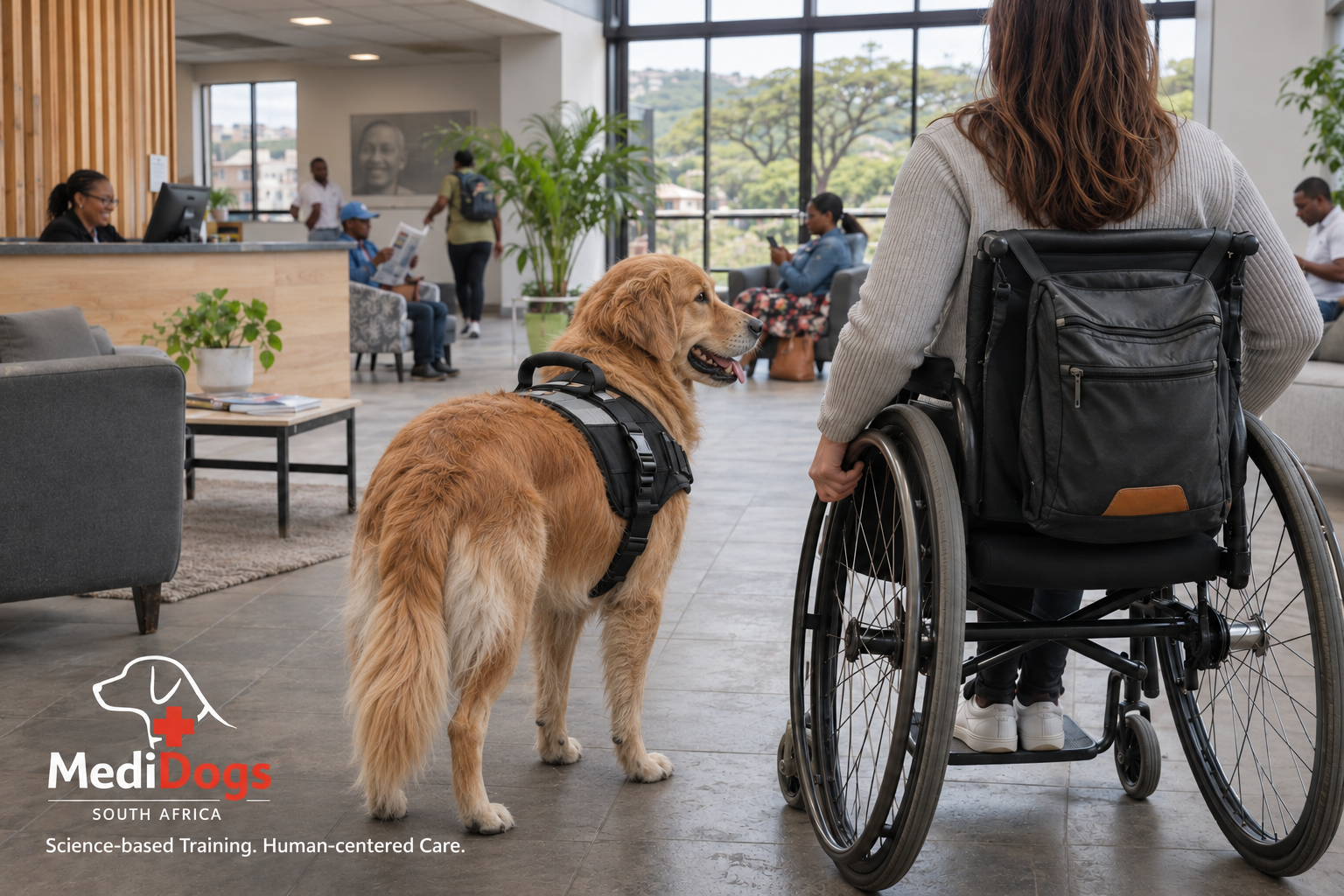
- Retrieving dropped or out-of-reach items, including a telephone, medication or other everyday essentials.
- Carrying suitable items and opening or closing doors, drawers and cupboards.
- Performing mobility-related positioning tasks and helping the handler locate seating, where appropriate.
- Activating an emergency system or seeking another person's help when the handler requires assistance.
Medical Alert and Support
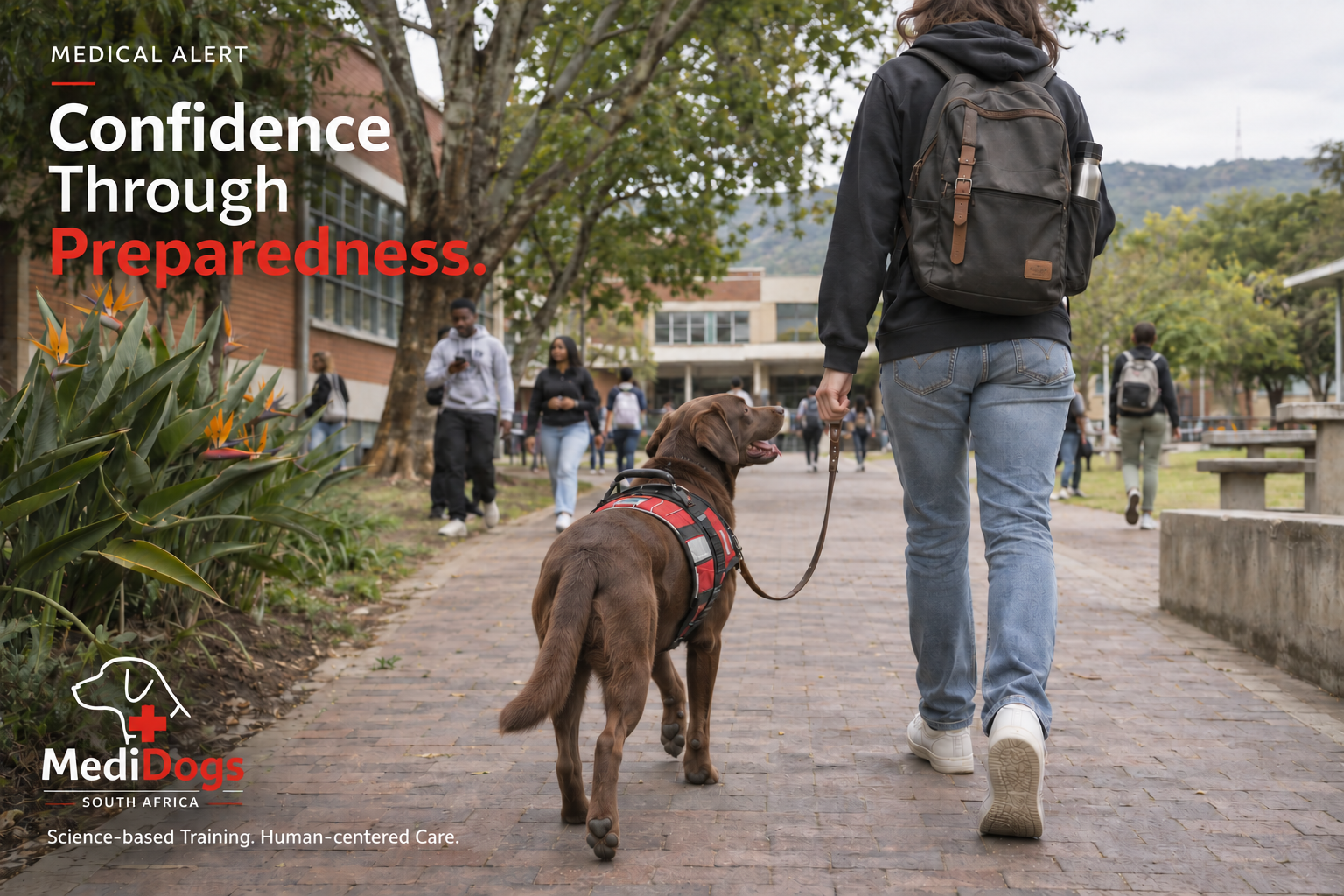
- Developing individually assessed alert or response tasks for medical needs, including glycaemic changes, seizure-related events and other relevant medical episodes.
- Using trained alert behaviours where suitable cues can be identified and reliable responses established; advance warning cannot be guaranteed.
- Retrieving medication or a telephone, seeking help, or activating an emergency system during an episode.
- Supporting safe positioning or helping the handler reach seating as part of an individual response plan. Assistance complements medical care and does not replace it.
Psychiatric Support
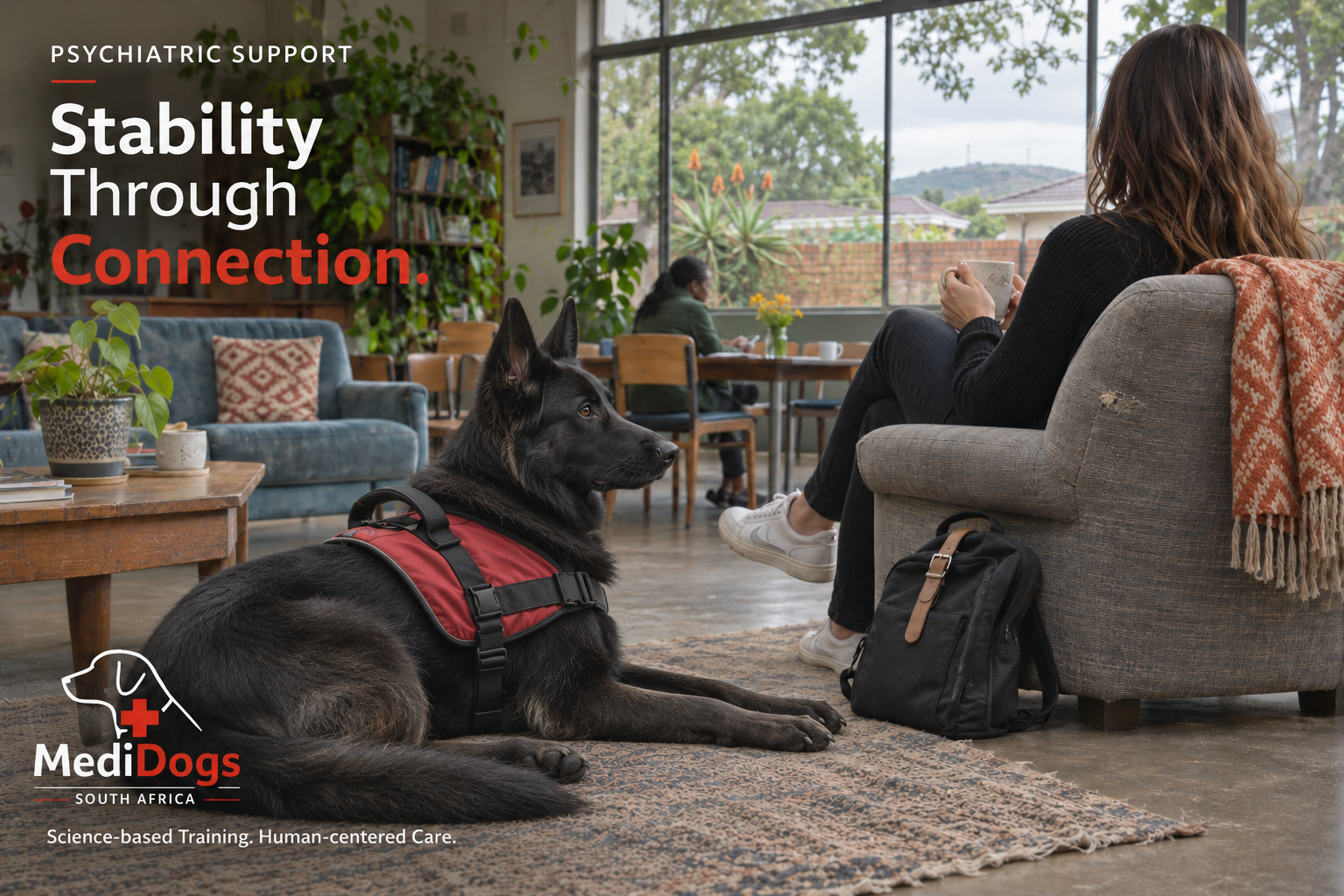
- Performing trained interruption tasks, such as a nose nudge or tactile contact, in response to identified behaviours or escalating episodes.
- Providing individually trained grounding or deep-pressure tasks where appropriate to the handler's needs.
- Using trained positioning to create personal space in public environments.
- Retrieving a required item or seeking help during an episode. Support is task-based and complements existing therapeutic care, rather than relying on companionship alone.
Neurodivergence Support
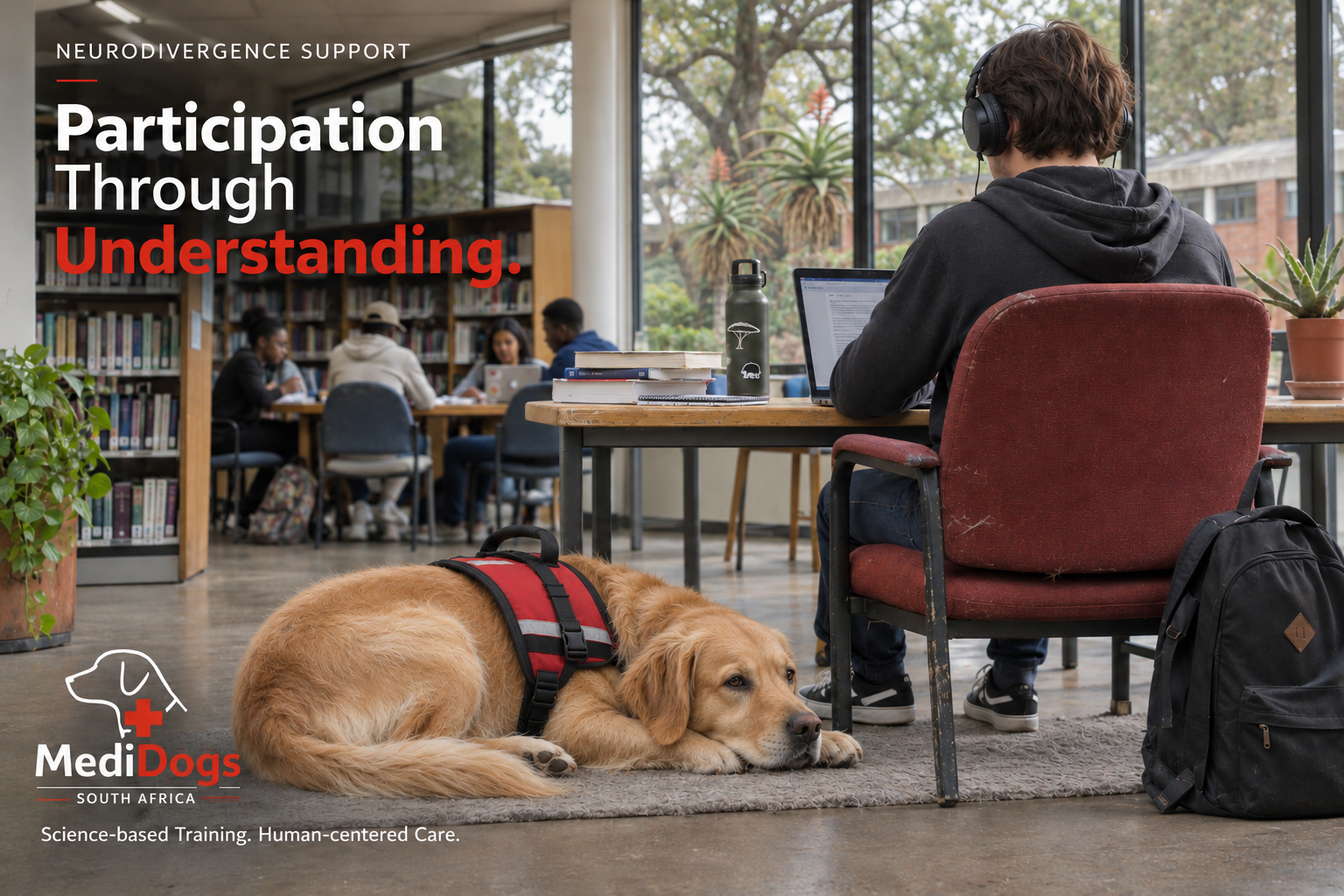
- Providing individually trained grounding or deep-pressure tasks during sensory overload, where appropriate.
- Using trained cues and task routines to support transitions, everyday routines and participation.
- Interrupting identified harmful behaviours or escalating episodes through a trained nudge or tactile response.
- Performing positioning or help-seeking tasks in overwhelming environments. Tasks are selected around the individual's support needs rather than assuming all neurodivergent people require the same assistance.
Therapeutic Support Dogs (Facility and Clinical)
These dogs support therapeutic environments such as:
- Rehabilitation centres
- Mental health practices
- Hospitals and clinics
- Educational support settings
- Structured canine interactions as part of corporate mental wellness campaigns
They are trained for calm engagement, emotional regulation support, and structured therapeutic interaction under professional supervision. MediDogs South Africa does not train and place therapy dogs.
Contact MediDogsScience-driven Training.
Contact us